By 。 | 26 November 2025 | 0 Comments
Boost Your Cutting and Engraving Efficiency
Achieving high-quality cutting and engraving starts with a high-performance laser tube. CO2 glass laser tubes are efficient, stable, and cost-effective, making them the preferred choice in the industry. Whether for personal studios, educational labs, or industrial workshops, a quality CO2 glass laser tube can dramatically improve processing speed and product quality.
Selecting a reliable tube is critical because it directly affects precision, consistency, and the overall quality of your finished products. MCWlaser and Reci offer high-quality CO2 glass laser tubes that meet these demands, ensuring your equipment performs at its best.
Working Principle of CO2 Glass Laser Tubes
CO2 glass laser tubes use carbon dioxide (CO₂) gas as the lasing medium, sealed in a high-purity glass tube with a mixture of nitrogen (N₂) and helium (He), energized by an electrode discharge system. The working process includes:
Gas excitation: High-voltage discharge energizes the gas mixture.
Energy transfer: Nitrogen molecules transfer energy to CO₂ molecules, which emit photons.
Resonant amplification: Photons bounce between mirrors in the tube, forming a stable, high-energy laser beam.
Laser output: The beam emits at approximately 10.6 μm, ideal for cutting, engraving, and marking non-metal materials such as wood, acrylic, and leather.
The sealed glass design ensures gas stability, extending tube lifespan and maintaining consistent power, which is essential for precision cutting and engraving.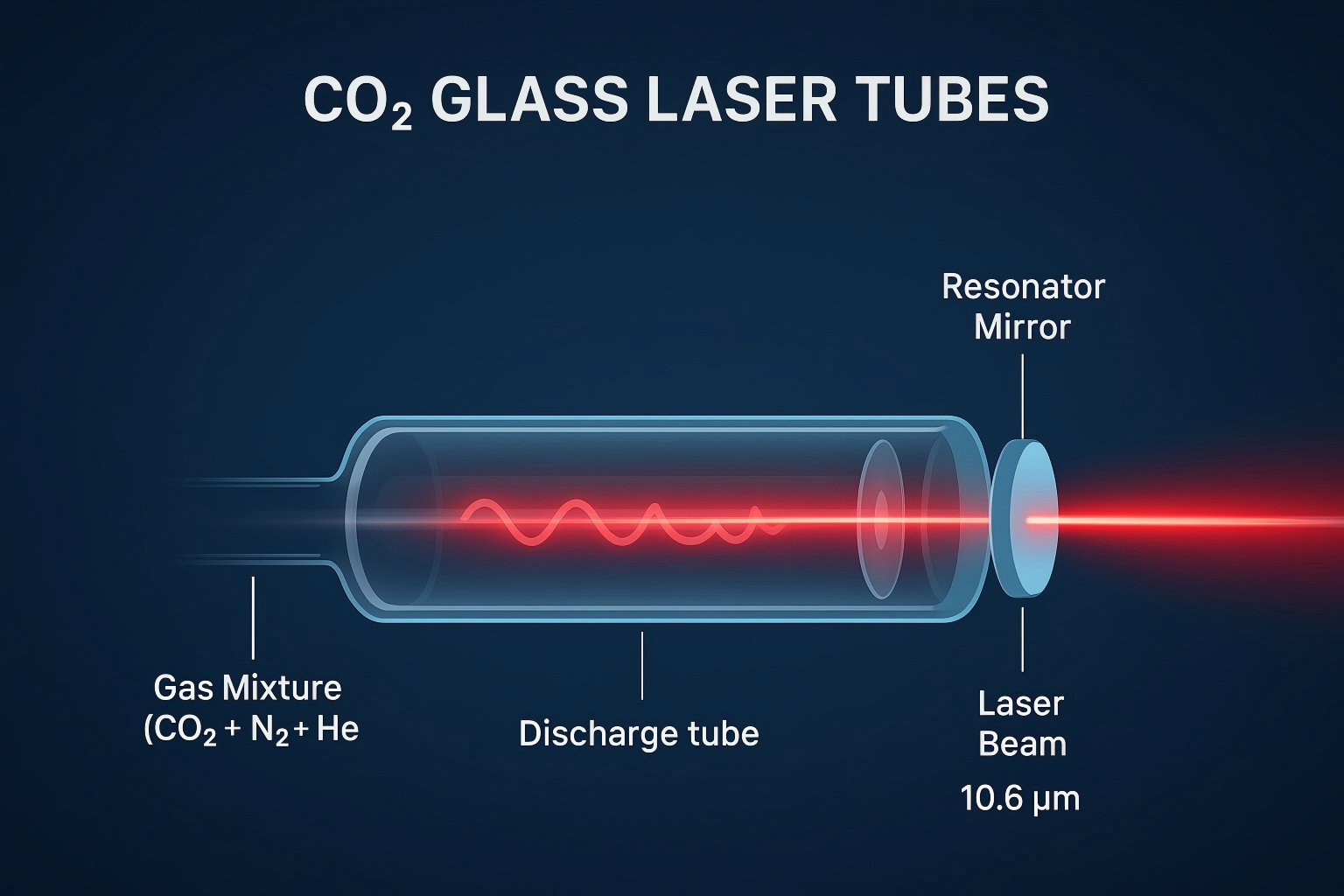
Key Performance Advantages
Stable High Power Output: Minimal power fluctuation during long processing, perfect for thick materials and large-area engraving.
Wide Application Range: Cutting wood, acrylic, and fabrics; engraving leather, bamboo, and stone; marking QR codes, text, and intricate designs.
Cost-Effective and Easy to Maintain: Lower cost and simpler maintenance compared to metal or enclosed laser tubes, requiring no complex adjustments.
High Compatibility: Compatible with most CO2 laser equipment, supporting multiple power levels for easy upgrades or replacements.
Tips for Extending the Lifespan of CO2 Glass Laser Tubes
Cooling Management: Ensure proper operation of water or air cooling systems to prevent overheating.
Stable Power Supply: Use a stable voltage to reduce fluctuations and avoid frequent on/off cycles.
Proper Power Usage: Adjust output according to material thickness; avoid continuous full-power operation.
Regular Cleaning: Keep the laser tube and internal equipment clean to prevent dust or smoke from affecting the optical path.
Application Scenarios
CO2 glass laser tubes are versatile and widely used across industries due to their stable output and suitable wavelength (~10.6 μm). Typical applications include:
Laser Cutting: Wood, acrylic, paper, fabric, and other non-metal sheets.
Laser Engraving: Leather, bamboo, stone, rubber, and decorative materials.
Laser Marking: QR codes, text, logos, and intricate patterns on non-metal surfaces.
Industrial Production: Mass production of custom products, signage, and packaging.
Educational & Studio Use: Prototyping, DIY projects, and creative artwork.
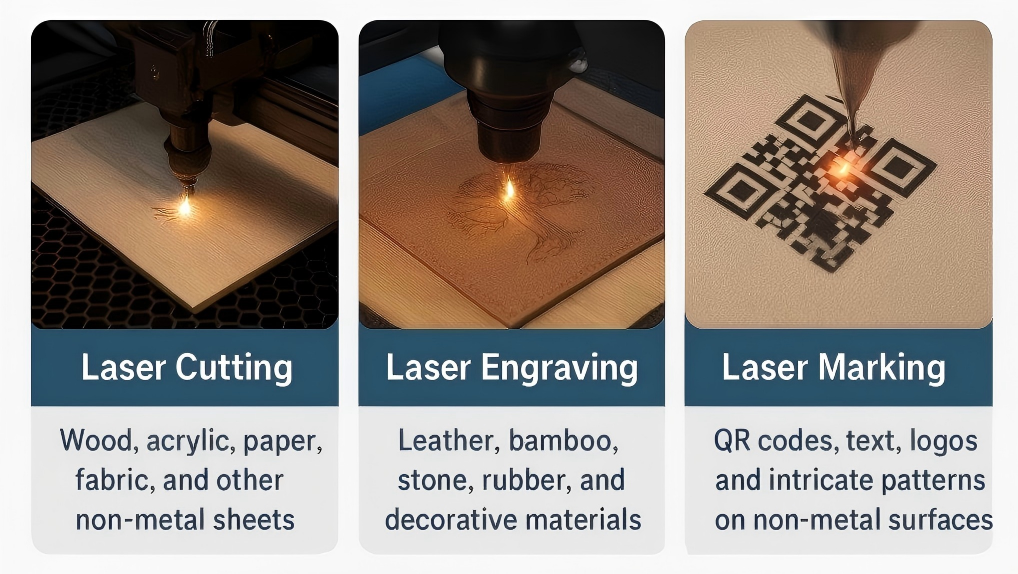
With precise control and consistent power, CO2 glass laser tubes help achieve high-quality finishes, intricate details, and efficient processing.
MCWlaser and Reci Brand Recommendations
Selecting a high-quality CO2 glass laser tube is key to achieving optimal results. MCWlaser and Reci offer CO2 glass laser tubes with the following advantages:
Rigorous Testing: Each tube undergoes power and stability tests.
Multiple Power Options: Suitable for entry-level to industrial applications.
Fast Delivery: Ample stock with global shipping.
Professional Technical Support: Installation guidance and usage support provided.
Conclusion
Whether for small studios or industrial production, choosing a high-quality CO2 glass laser tube can enhance processing efficiency and product quality, allowing your laser equipment to reach its full potential. By understanding the working principle, performance advantages, and applications, users can maximize the value of their laser system and achieve superior results in every project.
Leave a Reply
Your email address will not be published.Required fields are marked. *
